
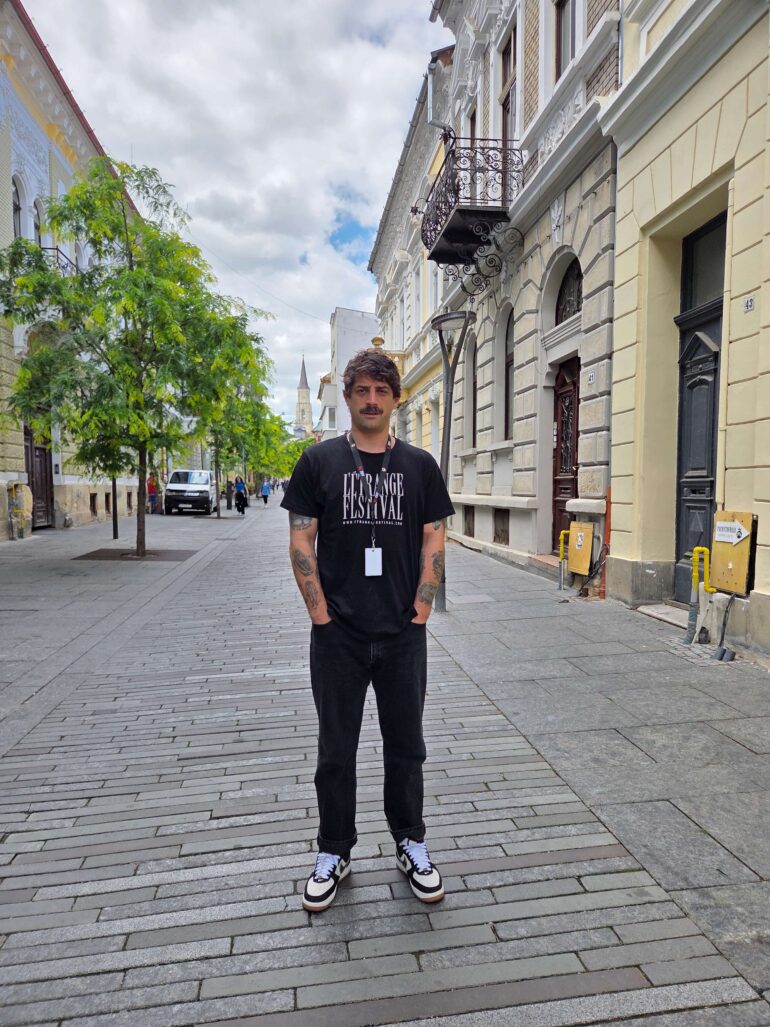
I loved The Turkish Coffee Table, and I had the chance to moderate its first Q&A session. Before that, I chatted with the director while the public was watching the movie. When I left Arta Cinema, about 20 minutes after the Q&A was done, there were still plenty of people surrounding Can and wanting to chat about his movie. That says it all.
Tell us some things about the movie you brought to TIFF, The Turkish Coffee Table.
This is my seventh film and a departure from my usual style and genre. I tried to do each of my films like a different debut. This one is meant to be a Trojan horse to the Turkish mainstream, and it’s the first time I worked with an A-list cast, much of it thanks to my star lead actor, Alper Kul, who is a darling of the public and industry.
You say it’s a different style, but you didn’t go far from your usual themes like family, everyday life, or death.
True, but in terms of style, camera work, and lighting, it’s a totally different atmosphere. It’s my first ever film, which takes place completely in daylight; usually, my films are at night. I went with a very static camera on a tripod, designed to look like a Netflix family movie.
Your movie is a remake of the Spanish The Coffee Table. What made you do this remake?
Last year at Cannes, Pablo Guisa told me he had the remake rights to this crazy film, which Stephen King called the most disturbing movie you will see. I didn’t believe it, but went to see it anyway and… Oh, My God! Culturally translated to Turkey, this subject matter becomes four times crazier because family is so sacred here. Some people said my film is darker and funnier than the original, but I think it’s angrier. The characters are about to burst, and that’s exactly how it feels to live in Turkey to me.
But how is it to make movies there, considering the funding, the censorship?
Mainstream Turkish TV series make me want to kill myself. There’s lots of censorship in Turkish cinema. That’s why I take great pride in doing these auteur films from the land of telenovelas. Mainly, I feel very alone, but I think it’s an artist’s job to be alone.
How do you get money for your, let’s say, niche films?
It’s like pulling a rabbit out of a hat every single time. Every single film of mine is a checklist of all the things that shouldn’t be in a mainstream film. None of my films are funded by the Ministry of Culture; they are all privately funded by another mad person. For this one, Alper Kul (Lead Role Actor) read the script, loved it, and convinced his producer to make it.
How was it to work on a drama with an actor who only did comedy before?
For me to trust him was difficult, and for him to trust me was difficult. But from the start, I made it clear that I don’t do these films just to make people scared or to make money; I make them to pour myself out. I told him, and to the whole team of actors, not to play this as a comedy or a tragedy. They trusted me, and the crowd’s reaction was crazy.
Since TIFF is celebrating its 25th edition this year, I wanna know what you were doing 25 years ago?
I was 20, trying to be a DJ and trying to write a script. It was always at the back of my head: one day, I will make a movie without caring about profit, just making it the best as I can. There’s a funny internet meme saying, “I became a filmmaker just to make audiences listen to the music I like.” So 25 years ago, I was just a film buff, and my favourite thing in life was cinema.
The Turkish Coffee Table, Tuesday, June 16, 14.45 – Sapienția