
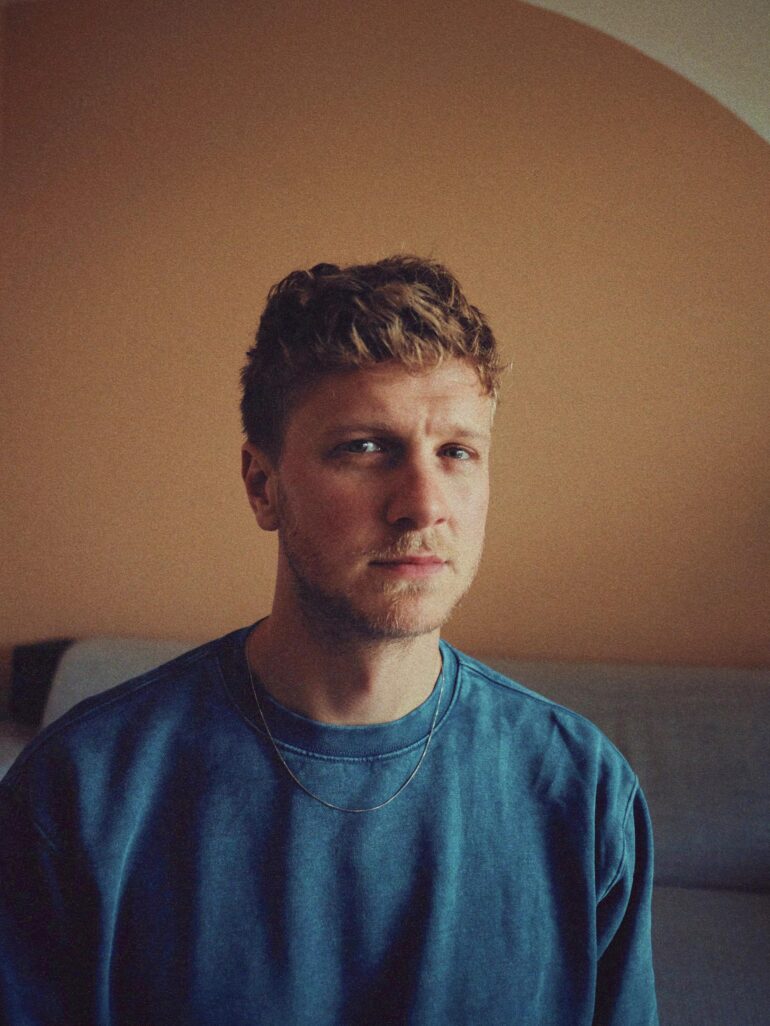
Director Joren Molter won the Audience Award, Special Jury Mention and Ecumenical Jury Prize at TIFF in 2024 with his debut feature Summer Brother. Now he returned with a second film, Nuclear Boy, screened in the Teen Spirit section. On this occasion, he talked about his creative process, the personal story behind the film and its contemporary themes.
Welcome to TIFF. How has the experience been so far? Have you seen any films?
I haven’t seen any films, but I’m really happy to be here. It’s my second time at the festival.
You won the Audience Award two years ago with Summer Brother, right?
Yes, it’s just crazy to come back. I have really nice memories of it, and I’m really happy to be here because, for me, this is one of the best film festivals I’ve ever been to. I really like the informal atmosphere. I think it’s so humble and so nice that the artistic director and the president are making the gin tonics at the gin tonic nights. For me, that’s an example of how humble the festival is. And yeah, I really like the festival. I really like the artistic taste of Mihai (n.r. Chirilov), the artistic director. So it’s been a blast to be here.
We’re all equals here. Thank you for the kind words. Tell me about Nuclear Boy. The film is based on a true story, right? The “Radioactive Boy Scout”. How did you and screenwriter Britt Snel stumble upon this story, and why did you choose to turn it into a film?
It might be a little personal, what I’m going to say now, but two years ago I was suffering from second-stage cancer. I was lying in a hospital for about three months, and they had to put me in isolation because they gave me so much chemotherapy that I became very vulnerable to infections and I felt so lonely there. That was the moment when I felt the urgency to tell a story about loneliness. So from that moment, Britt and I started developing this story while I was still undergoing chemotherapy.
For me, Nuclear Boy is about loneliness among young people. It’s also a little bit about social anxiety because a lot of young people are dealing with social anxiety right now, and I believe it’s one of the biggest mental health issues among youth today. I really wanted to support them a little with this film. For me, Nuclear Boy is a homage to the nerds. I’m a nerd myself. I love Harry Potter and Star Wars.
I actually wrote my dissertation on Star Wars.
Oh my God, really? What did you write about?
The whole phenomenon and how it became what it is today— one of the few franchises that reached that level of cultural impact and changed people’s lives.
That’s true. When I was six years old, I had a Jedi costume and I played in the garden with lightsabers. I made my own Jedi clothes. But to be honest, I was really an outsider. I’m still collecting Harry Potter LEGO sets, so I’m still a nerd. When I was young, I felt like such an outsider and didn’t fit in. I wanted to make a film about that because I believe a lot of young people have the same problem. I wanted to make a film for them—to help them a little in understanding life.
So Nuclear Boy is based on those news articles about the boy, but it’s even more based on my own youth. When I grew up, I wasn’t very social. My mother said, “You need to join the scouts,” so she actually put me in scouting. The opening scene is exactly the same scene I experienced when I was thirteen.
So you were also a scout. It’s really that personal.
Yeah. It was interesting because I really wanted to make friends, but I wasn’t able to. In the end, though, it turned out well. For me, that’s what Nuclear Boy is about: a guy who’s really lonely, trying to make friends, but not being able to do it.
But you also added this dimension of online validation.
That’s true.
Something that didn’t really exist back then.
Exactly. I wanted to tell a contemporary story, and I believe that when you’re lonely and have social anxiety, being online becomes a coping mechanism. So Aike tries to get attention from people on the internet by destroying himself. At first, he misunderstands what’s happening. He thinks people genuinely like him. But that’s the internet—you get catfished, you get destroyed.
And you’re willing to do things you wouldn’t normally do.
Exactly. As a film director, I wanted the strong force of the internet people to be something actively pushing him toward his downfall.
And you actually showed those internet users on screen. That’s very interesting.
Yeah, because I really don’t like showing iPhones, laptops, or text bubbles on screen. We already spend so much time looking at our phones. I didn’t want to make a film where we’re looking at a phone all the time. So I thought: how interesting would it be if I could put all those people directly into his room? It’s a stylistic element. And I can also talk a little about the music because it’s really unusual.
I wanted to explore weirder music—atonal tones, false tones. Music is a metaphor. Aike is trying to make friends, but he doesn’t succeed. The music, for me, is like a kid trying to play music but not succeeding all the time. He keeps making false notes. He tries obsessively, but it doesn’t always work.
There’s only one moment in the film where the music isn’t false, where it’s actually beautiful. That’s the moment when he gets friends.
Real friends. That’s beautiful. Tell me about the lead actor, Guus Blanken. He’s a first-time actor, right?
Yeah, that’s right. I saw a lot of experienced actors, but I didn’t believe them in the role of a nerd. Nerds are often pale, they don’t have a muscular body. All the actors have learned how to have a twinkle in their eyes at the right moment. I didn’t want that. So I tried to find someone else who had never acted before. This was his first acting experience, and I’m really happy to say that after the film, he got accepted into theatre school. So I’m a proud daddy. He did a really great job.
We rehearsed for about seven months because we could only get him out of school one day a week. So one day each week I had him in the rehearsal room. What I do as a director is shoot most scenes in a single take. I try to capture everything in one shot. It sounds simple, but it’s actually very difficult. If a scene lasts two minutes, I can’t cut the middle out because I only have one take. So I rehearse obsessively. I even shoot scenes on my iPhone during rehearsals. Then I watch them at home on the couch. We also assembled an entire rough version of the film from rehearsal footage because I needed to see if Guus’ pacing was good enough for being lonely, getting friends. Because i was not able to manipulate it that much in the film.
So you basically have two versions of the film.
Yeah, it’s crazy because it’s so much work. What I do is make the film before I make the film. Then, when we shoot, I’m just adding the final touches. What’s also funny is the opening scene with the explosion of the gnome. That’s very hard to do because, of course, I couldn’t actually explode something in my actor’s face. Only if it would be the last shooting day, of course (he laughs). But it was really interesting how we needed to do that. All the explosions in the film are real.
That’s exactly what I wanted to ask.
We did everything practically. But it was tricky because I wanted to keep the single-take style. So Guus performed the scene and reacted to the explosion. Then we cut, sent him to makeup to get blood on his face, and while that was happening we filmed the actual explosion. Then he came back, continued the movement, and we put everything together.
The problem was that we didn’t have the smoke effect you normally get after an explosion. But someone on set was smoking an e-cigarette. They blew the vapor into his shirt, and then we filmed it. It created this beautiful cloud of smoke. It was really fun. Very old-fashioned filmmaking.
I often ask directors about funny improvisations on set, but I don’t usually get such good stories. So thank you for that.
You’re welcome. The film was shot in nineteen days, which is incredibly fast. Normally you’d have thirty or thirty-five shooting days. In the Netherlands, we shoot about two or three minutes of film per day. We also have relatively short shooting schedules because I work with inexperienced actors and need to protect them a little. But this film had half the budget of Summer Brother. So it was pretty crazy.
It was interesting because while I was undergoing cancer treatment, Britt and I were writing the screenplay. I actually have a picture of myself receiving chemotherapy while working on the script. In a way, I was a sort of nuclear boy myself because of all the chemotherapy and radiation. I find it funny: I have the chemo going into my arm and the script resting on my body. It’s like Nuclear Boy writing the story Nuclear Boy.
That’s also how I see the world, and it’s how I approach humor. For me, Nuclear Boy is a black tragicomedy with thriller elements. I love humor where you don’t know whether to laugh or cry, where a situation is so embarrassing that you want to giggle even though you feel like you’re not supposed to. That’s the tone I really like, and it’s also how I see life on a daily basis. Life is funny and hard at the same time.
I completely agree. I have the same approach. Can you tell me about your collaboration with Britt? You’ve also worked together on your short films and on Summer Brother, right?
I’ve worked with her for about fifteen years now. I’m 32 right now. We started collaborating during our second year at film school and never stopped. It’s really nice. We also work closely with my producer, Floor Onrust. The three of us make a great team. She’s deeply invested in the stories we tell and understands exactly how we want to make films.
Britt and I are both outsiders. She loves manga and cosplay. At film school, we didn’t really fit in. Nobody wanted to work with us because we weren’t cool enough. So we’ve basically been making films about our traumas ever since. She’s the writer. I’m dyslexic, so I don’t like to write. But we have a very strong collaboration.
And you start the creation process of a film together?
Always. Right now we’re already thinking about the next film. She has an idea, I have an idea, and we’re trying to figure out what we want to show. I’m really grateful because a lot of directors struggle to find a good writer, and I’m thankful she wants to work with me.
What we also do with scripts is interesting. Because I shoot scenes in long takes, if I assembled every scene at full length, the film would be three or four hours long.
So I shoot each scene in its normal version, maybe three minutes, but I also shoot a shorter version of the same scene—one minute, maybe thirty seconds—so I have options when creating the pacing of the film.
Another thing I recommend to every director is this: after shooting a scene, I ask the actors to perform it one more time without dialogue. People talk too much in films. You want to tell stories through images.
I agree.
Most of the time we end up using the dialogue-free version in the final film. A screenplay is one medium. Cinema is another.
They’ve made films without dialogue for a very long time.
And it’s a universal language. I’d love to make a film with no dialogue at all someday. That would be amazing. It’s difficult, though.
It would definitely be something different. I’d watch that.
Thank you. I’m also really happy with the cinematography. It was a collaboration with Roy van Egmond, who is a great cinematographer. He found a beautiful way to capture both the loneliness and the absurdity of the film. We really tried to visualize loneliness in cinema. For example, in the opening, we place Aike in front of all the scouts in a wide shot. It’s him against the world. As he starts making friends, we place him closer together with other people in the frame. Even though there’s a shot of Merten in the film, the bald scout leader. There is a moment when he is the little outsider. We focus only on him while the others talk around him. For me, the whole film is about loneliness. He is lonely. Mikky (n.r. the mother) is also a really lonely woman.
That connects perfectly to my last question. Do you see any solutions to this loneliness epidemic, especially among young boys today? Because, as the film shows, online validation isn’t the answer.
No, it isn’t. Aike gains more self-confidence by doing what he wants to. In the beginning, he’s trying to be cool and when he’s building the nuclear reactor core, he’s getting more social skills. He’s calling people. He’s dealing with smoke detectors. He’s learning to be more social. That’s the difference between the beginning when he’s not scouting and the ending when he is scouting. He simply doesn’t care anymore.
And I think that’s a good way to go. It’s okay if someone doesn’t like you or walks away. It’s not nice, of course, but it’s also good to get a little bit more tough. It’s not the end of the world. When you’re really afraid of being alone, that fear becomes the thing standing in your way. If you can relax a little you will make friends.
It goes back to what you said earlier: doing what you love, what you are good at, what you are passionate about. That gives you confidence and in the end, you will attract people.
Exactly. And don’t be ashamed of it. You’ll attract the people who fit with you.
Thank you so much. This was a very nice interview.
Thank you so much.