
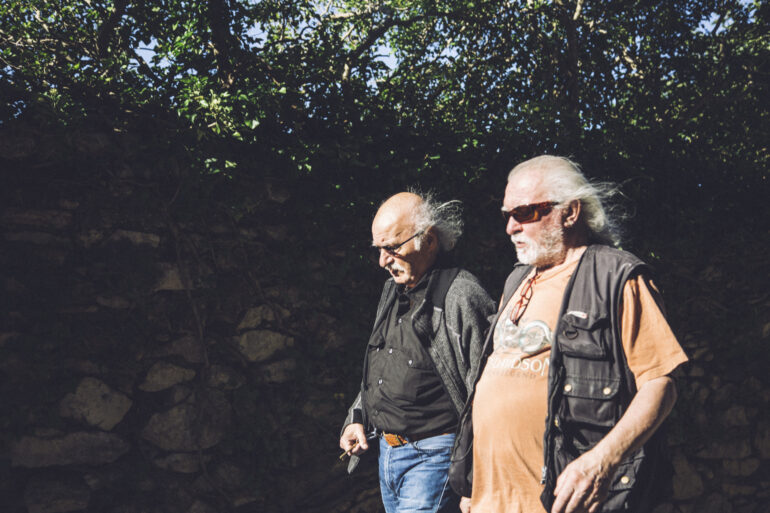
Kate Mason from Film Independent talked to us about Always Remember, dedicated to the memory of the Holocaust. Two films will be screened with free admission: Orphan (r. László Nemes) can be seen on June 17, at 20:30 at Cinema Florin Piersic and on June 19 at 19:45 at Cinema Victoria, while Pepi Fandango (r. Lucija Stojevic) will have one screening on June 17, 18:15 at the Military Club.
When and how did the Always Remember program come about? Can you tell us more about this initiative?
A groundbreaking survey conducted in 2020 by The Conference on Jewish Material Claims Against Germany (Claims Conference) revealed an alarming lack of basic Holocaust knowledge among Millennials and Gen Z. In 2025, Claims Conference performed a broader international survey that exposed a global trend in fading knowledge of basic facts about the Holocaust.
In response, we worked with both Claims Conference and the Cayton-Goldrich Family Foundation to create Always Remember, a special screening series designed to raise Holocaust awareness. The first edition of Always Remember took place in 2025. Over six months, we presented a virtual film series of 18 short and feature-length documentary and fiction films that share meaningful stories about the Holocaust. In 2026, we partnered with the New Orleans Film Festival and the Transilvania International Film Festival to highlight 4 more films that we believe can help younger generations understand the Holocaust and inspire resistance to genocide worldwide.
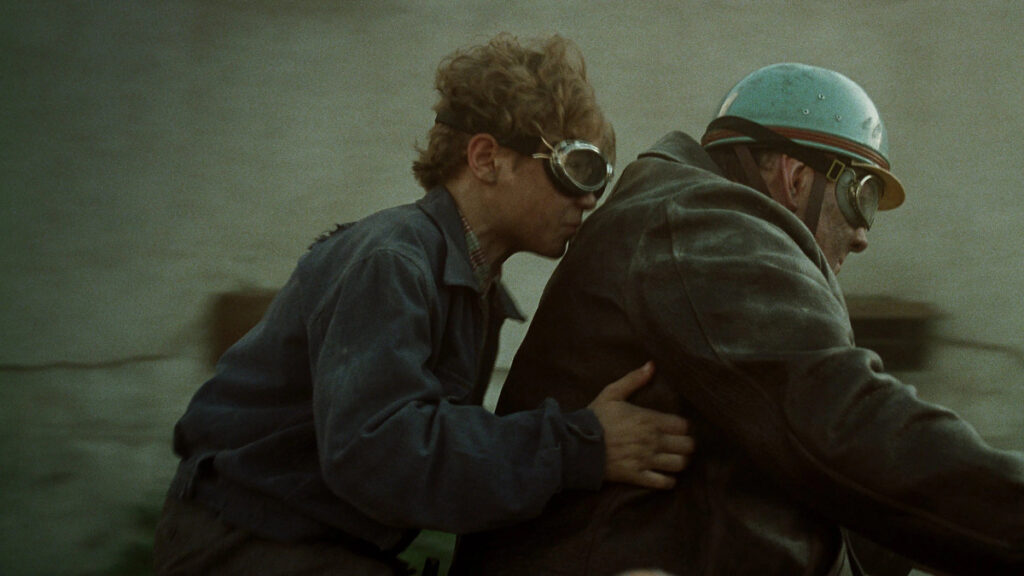
What does the film selection process involve? What did you consider when choosing these two films, Orphan (dir. László Nemes) and Pepi Fandango (dir. Lucija Stojević)?
The film selection process includes working with Claims Conference, which provides grants to filmmakers whose work explores the lives of the victims of the Holocaust. While not all films in the Always Remember program are from the Claims Conference Catalogue, many are. All films selected are chosen by the Film Independent Programming staff, who search for films that feel accessible, innovative, and showcase excellent filmmaking and cinematic style.
László Nemes’ Orphan has garnered attention from Busan to Cannes– there’s much to say about the film’s impressive attributes, but in an effort to be brief, I’ll say that the stunning cinematography and Andrea Waskovics’ performance are what stole our hearts. We’re so excited that Andrea will be joining the Q&A after the film’s screening on Friday at Cinema Victoria.
Lucija Stojević’s Pepi Fandango is a documentary that explores the intersection of music and memory. We were so moved by this story of two elderly friends, one a Holocaust survivor, who leave Vienna on a road trip to southern Spain, as they confront childhood trauma. This film celebrates the power of music and friendship, while also familiarizing audiences with the Romani victims of the Holocaust and the cross-cultural experiences within concentration camps.
We live in an increasingly divided world and society. The political situation in many countries around the world seems unstable, and extremist voices appear to be growing louder. To what extent do you still believe that cinema can educate and influence opinions? Sometimes I feel we find ourselves in a ‘preaching to the choir’ situation. Are the right people seeing these films?
The creation of Always Remember was born out of a desire to avoid preaching to the choir. In 2025, the Claims Conference’s Index on Holocaust Knowledge and Awareness survey showed that only 44% of Romanians believe something like the Holocaust could happen again. We believe in the power of storytelling to amplify diverse voices and experiences, and foster empathy and understanding. Ultimately, skilled artists know that audiences connect to emotions and stories more than a news report, and we hope that the films we’ve selected leave a mark on the people who see it, perhaps even inspire them to learn more. Since this program’s inception, we’ve also prioritized digital screenings in an effort to make these films accessible to as wide an audience as possible.
Do you feel that cinema needs to invent new visual metaphors and storytelling styles to keep the memory of the Holocaust relevant for future generations? I am thinking about a generation raised on short-form content, used to a very different media language.
This is a great question, and I’m not sure if we’ve figured out the answer. But I do see Tiktok accounts all the time that feature educators, historians, and elders sharing stories, often those left out of history books, for eager audiences. I think the democratization of information on the internet has made young folks more aware of the many histories that shape our understanding of the world. I also believe that filmmakers will always create new languages for storytelling, so if there’s anyone I have faith in, it’s the artists. And where there is art, I believe there will be an audience. It’s more the infrastructure for supporting artists that I worry about.