
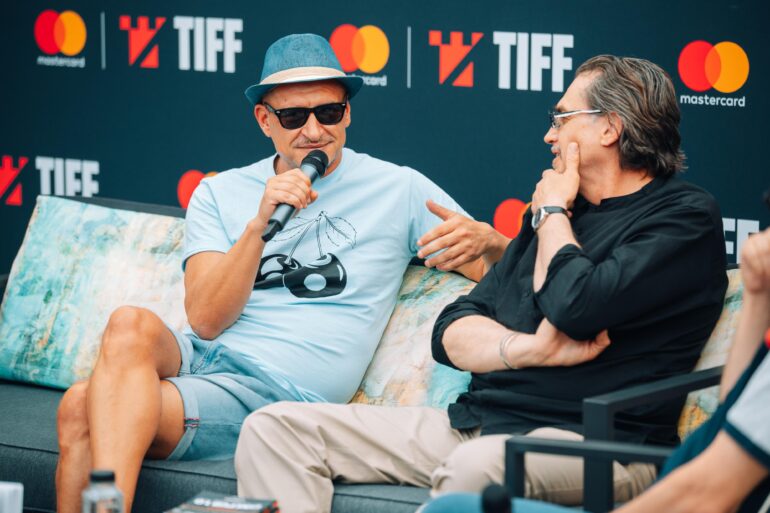
Open as always, the festival’s artistic director, Mihai Chirilov, spoke to us about the changes in film and society over the past 25 years, and about the films that could fuel the conversation.
Șerban Mark Pop
This year, TIFF is turning 25 and celebrating its anniversary with a special selection titled 25 Years Later. What thoughts can you share with us regarding both this quarter-century milestone and the lineup put together to commemorate it?
First of all, a quick clarification—because I, too, get caught up in the hype of a round number: this is indeed the 25th edition, but TIFF was born on June 3, 2002, so it has actually just turned 24. The quarter-century mark will have to wait just a little bit longer. But whether it’s 24 or 25, it’s still an awkward age. You are mature enough to recall episodes from the very first edition—when Haneke’s The Piano Teacher and Miike’s Audition shook a gray, conservative little town to its core, resulting in a series of fainting spells—yet still young enough to refuse the hypochondriac nostalgia of “old-timers spinning old yarns.” So, for this 25th anniversary edition, I propose not an exercise in weeping over the past, but a polemical gamble with time.
Taking a look back—in perfect sync with the occasion—the 25 Years Later section revives ten heavyweights born in the grace year of 2001. What times those were! Cinema had substance, originality, intuition, visceral splendor, and, above all, guts. From the hypnotic labyrinth of Mulholland Drive and the bunny-eared schizo enigma of Donnie Darko, to the absurd war fable No Man’s Land and Cristi Puiu’s explosive debut Stuff and Dough, the screen pulsated with anxiety and untamed radicalism. Films back then had the courage to risk everything without a safety net or protective filters. By contrast, the vast majority of contemporary productions seem stuck in an aseptic and unimaginative limbo. Today’s cinema suffers from a chronic lack of nerve: it is well-behaved, predictable, running on autopilot, endlessly duplicated from a mold of conformity. It’s becoming increasingly difficult to deliver a program that lives up to our reputation as an agent provocateur, but to paraphrase Corneliu Porumboiu (who is featured this year with a complete retrospective and honored with the TIFF.25 Anniversary Trophy), we make a festival the best we can. 😊
Speaking of the festival’s age, TIFF continues with the Teen Spirit jury, made up of individuals younger than the festival itself. What can you tell us about this section geared toward youth and the films within it?
Having a section with films for and about them, judged by them, was our way of drawing them into the festival universe. If we don’t give them a voice, there’s no point in complaining that the younger generation leaves us on “read” and goes about their business. This holds true not just at TIFF, but anywhere in the world. The good news is that several jurors from the pilot edition have returned to the job after debating passionately and with utmost seriousness last year to choose a winner—a clear sign that they loved the experience. To push the Teen Spirit experiment even further, we provided them with the space and logistical support to curate their own program, leaving them “on their own” (to borrow the title of Tudor Jurgiu’s new film) to articulate and own their choices—precisely to see what truly preoccupies people their age.
As for the films in Teen Spirit—they continue to tackle coming-of-age, belonging, discovering sexuality, bullying, abuse, juvenile violence, and the volatility of teenage friendships. However, for a complete breakdown of the ten titles in competition, I invite you to interrogate my colleague responsible for the selection, Marius Bălănescu.
Personally, I found the premise of the Spanish film Sundays extremely bold and unusual, where a girl leaves her family and acquaintances bewildered by announcing she wants to become a nun. Religion isn’t exactly a hot topic among Gen Z, and what is truly remarkable about this film—which won the top prize at the Spanish Oscars—is its impeccable ambiguity and its stubborn refusal to demonize either side: neither dogmatic rigidity nor secular confusion.
If 25 Years Later is a section full of nostalgia and Teen Spirit is full of hope, then we must look toward The Pitch-Black Anthology, a section made up of the “darkest” films possible. Where did the idea come from, and what do you recommend most?
Nostalgia can be a poisoned chalice and hope dies last, but humor isn’t always a safe bet either—especially when it is so black (or dark, as you say) that today people tend to textbook-label it as cringe instead of surrendering to it, immune to outrage. The idea came to me from The Cable Guy, which the algorithm suddenly slipped into my Instagram Reels. I think it’s one of the most underrated and radical mainstream movies of the ’90s. Beyond the confusion of the era—seeing Jim Carrey blow up his bankable star image by playing a sinister and tragic psychopath—Ben Stiller’s film is terrifyingly prophetic. The protagonist is not just a lunatic cable guy; he is one of the first algorithms in pop culture history and the embodiment of the desperate craving for human connection that we now log daily on social media. In an era dominated by sterile and harmless comedies, The Cable Guy is a monument to dark humor—terribly uncomfortable, but also a warning sign flashed three decades before increasingly smaller screens swallowed us whole.
To measure the proportions of this crisis, and out of that same polemical spirit, I programmed the line-up for The Pitch-Black Anthology—a retrospective of black, scandalous comedies and humor pushed to the extreme and beyond. Here we find past classics like Delicatessen, Pepi, Luci, Bom and Other Girls on the Heap, The Discreet Charm of the Bourgeoisie, Fargo, and Happiness, alongside a few sulfurous gems from the present—admittedly rarer—like Fuck My Son! or Good Boy. The question is: why don’t we laugh uncontrollably anymore, perhaps with a slight hint of guilt, the way we sometimes do at a wake? The answer is simple and sad: filmmakers are afraid. In a world where audiences have become hypersensitive, ready to take offense at the slightest thing, auteurs walk on eggshells and preemptively tone down any irreverent comic impulse so as not to offend. A film like Ferreri’s La grande bouffe would no longer be possible today. Early Almodóvar is light-years away from the Almodóvar of today. Buñuel’s ghost has retired (only Jude still invokes it occasionally), and Todd Solondz has been silent for a decade. We have traded the freedom to provoke and misbehave for the comfort of not bothering anyone.
The tragedy is that this regression is visible to the naked eye in the way cinema is packaged today. Everything has become so formatted that specialized language (from synopses to film criticism) has been hijacked by a wooden terminology that was nowhere to be found 25 years ago. The issue is not the themes themselves, but their mandatory box-checking, as if they were compulsory reading milestones. Today, the majority of film discourse opportunistically and spasmodically invokes buzzwords like identity, diversity, ecosystem, sustainability, resilience, intersectionality, inclusive, underrepresented, transgenerational, safe space, (hetero)normative, microaggression, colonial, and the obligatory empowerment. All these terms serve as mere passwords, signaling the correct alignment with a new ideological marketing. Instead of engaging prose and truly brilliant aesthetic and critical analysis, we are fed cookie-cutter exhortations and manifestos tailor-made for corporate activity reports.
With this dark anthology, I invite you to leave your filters at the door and (re)watch these films with the mindset from before the Great Taming.
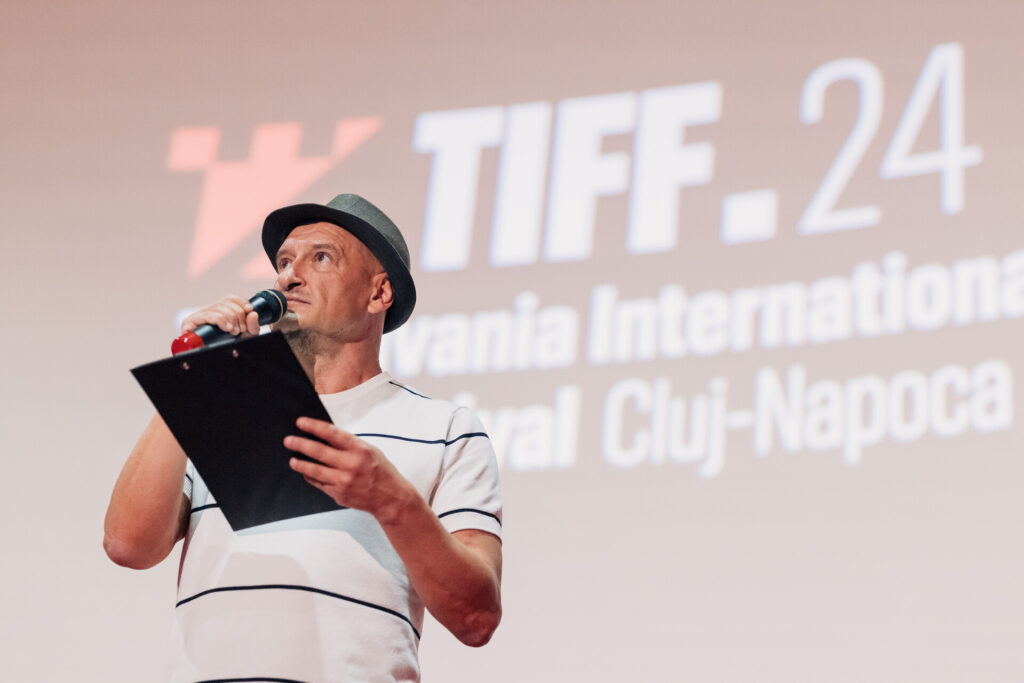
Equally dark (and perhaps equally controversial) is the small section curated in partnership with the Film Independent, titled Always Remember. What inspired a selection that brings the Holocaust back into discussion, especially during these times?
I don’t consider this small section equally dark, nor anywhere near as controversial. Films from all over the world periodically bring the Holocaust back into discussion—and I don’t believe programming decisions should be dictated by the world’s momentary agenda. We said yes to the proposal from Film Independent (the organization behind the prestigious Film Independent Spirit Awards), just as we did a few years ago with IICCMER for a selection of films centered on the crimes of communism, for one and the same reason: collective memory is fading at an alarming rate.
The films in question—the Spanish documentary Pepi Fandango and the Hungarian drama Orphan by Oscar-winner László Nemes—are not targeted manifestos or propaganda jackhammers, but genuine, nuanced, complex, and deeply human works of art. The current context is indeed a sensitive one, and the reality on the ground is horrific and must be denounced, because you cannot separate art from politics; history, however, cannot be put on pause. The role of a festival is also to cultivate empathy, dialogue, and discernment through art, not a de rigueur boycott—otherwise, you feed awkward situations like the recent Nadav Lapid case (an unfortunate example of a rushed reaction and institutional conformism) or foolish outbursts and heckling like what occurred at Rotterdam during the screening of Far from Maine.
Let’s move on to the cornerstones of the festival: the Official Competition and What’s Up, Doc?. What caught your interest this year? What are the absolute must-watches?
At the risk of repeating myself, I will say that I penalized standardized arthouse productions and tired “festival film” formulas, favoring a flirtation—even an orgiastic one—with genre cinema. To me, this is an infinitely bolder and more stimulating move for filmmakers who are just starting out. If there is a fiber connecting the films in the Official Competition, it stems from a certain existential claustrophobia. Most characters are trapped in rigid or dysfunctional systems—whether familial, social, or ideological—which they are desperately trying to claw their way out of.
Imagine a sort of Jenga game where each film is a block. A load-bearing one. Together, they stand upright, though the friction is palpable. If you pull one out, the whole thing collapses. This high-risk structure is the signature of this year’s competition—not a polite, predictable thematic unity, but a razor-edge tension between cinematic languages and narratives that normally wouldn’t coexist in the same block. Absolute must-watches include the cancerous melodrama in Sicko, for the cynical way it pulls the rug out from under you when it shows its true face; the rocambolesque narrative of No One Will Know; the improbable yet seductive genre mix of the surrealist Thai fantasy A Useful Ghost; the witty, deadpan, Porumboiu-esque aura of the Argentinian cinephile fable The Night is Fading Away; and last but not least, the political parable disguised as a Lanthimos-worthy farce in the Hungarian film Feels Like Home—though I believe all 12 films hide a trapdoor—emotional, narrative, or stylistic—into which even the most seasoned viewer will unexpectedly freefall.
As for the What’s Up, Doc? competition, assembled by my colleague Crăița Nanu, it remains an atypical kaleidoscope that flies in the face of the formatted packages offered by other festivals. It is a territory where uncomfortable questions are not sacrificed for the sake of correct positioning, finally leaving room for human truth, with all its good and bad. Not to be missed are Buchra, a sensitive coming-out originally transformed into an animation with coyotes; the visceral Hex (the story of an all-female heavy metal band that puts all feminist jokes to shame); and the political abyss of The Guardians of Seoul, an explosive journalistic documentary about the declaration of Martial Law in Korea two years ago—a brutal warning of how History risks repeating itself.
From the pillars of the festival to the pillars of cinema. Almodóvar. Jude. Mads Mikkelsen, if we include actors. How do their new films look? What other “heavyweights” can or must be seen at TIFF this year?
Almodóvar’s new film, A Bitter Christmas, is a close sibling to Pain and Glory and shares the same bittersweet self-referentiality—it will definitely be a hit for those who don’t view a film as a singular experience, but rather as a piece of that puzzle-in-progress that is the work of an iconic filmmaker. Radu Jude returns to TIFF with no fewer than three films, including the devilish Dracula and Diary of a Chambermaid, freshly screened at Cannes—a melodrama that is only seemingly tamer than his corrosive and always unpredictable recent filmography. Mads is maddeningly good in The Last Viking, a Nordic comedy darker than a fatal diagnosis. At over 70 years old, Jackie Chan remains spectacularly agile and wins on points against Artificial Intelligence in an irresistible action flick, The Edge of the Shadow, which I wished would never end when I saw it in Rotterdam.
Emma Thompson is unexpectedly cool in a life-or-death frosty thriller (Dead of Winter). Italian director Gabriele Muccino sends the heroes of his melodrama on infidelity to a colorful, sun-drenched Tangier, but the grim twist at the end of Unspoken Things leaves you speechless. The leading man in Maspalomas received a well-deserved Goya Award for Best Actor in a moving story about coming out in old age. Irish director Jim Sheridan returns with an inventive thriller inspired by a true case and modeled after 12 Angry Men, and the resulting Re-Creation is the perfect film for the bipolar times we live in, where nobody listens to anyone anymore, and analytical, rational thinking is a casualty by default.
On fast forward: Juliette Binoche exhibits a fascinating physicality in the dance documentary In-I in Motion; François Ozon delivers a flawless adaptation, with a dash of audacity, of Camus’s The Stranger; the splendid Carmen Maura—the one from the old Pepi…, but also from the Venice audience favorite Calle Malaga; director Ben Wheatley—this genius terrorist of the British underground—and his new sci-fi Bulk, a low-budget indie about the multiverses and paranoia, made with little money and a lot of anarchy; and obviously, Marilyn, celebrated at her centenary with the closing film of TIFF, Some Like It Hot.
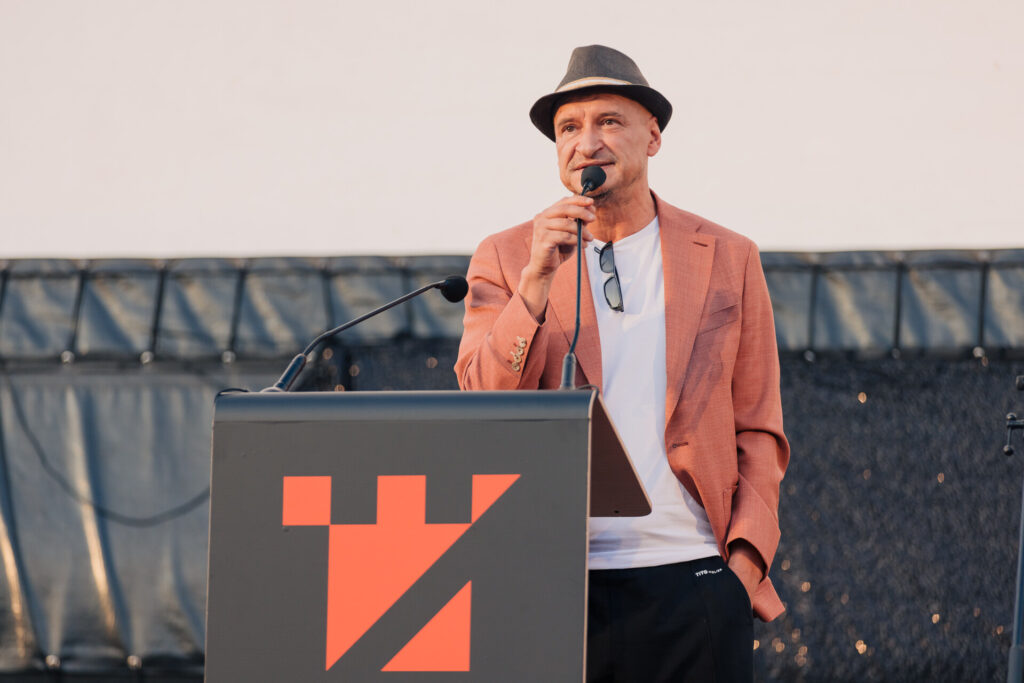
Now, let’s talk a bit about ZFR (Romanian Days) and Hungarian Day. How do our neighbors’ films look? How do they resemble Romanian ones? What sets them apart?
Hungarian Day has been conceived for years by my colleague Zágoni Bálint—who provides an exceptional radiography of our neighbors’ cinema. What I know is that two of my absolute favorites from last year, the previously mentioned Feels Like Home and the unique craziness of Pálfi György’s Hen, have no rival in current Romanian cinema. For every realist drama where the two national cinemas meet, there are gems like these two that I wish I could see in domestic production. Plus, both films were made in a 100% independent regime, without any financial support from the state.
About ZFR, I’ll only say for now that it’s the year of debuts (no fewer than 9 out of 11 films in the ZFR competition), of actors turned directors, and of fiction films (after many years where documentaries took the lead)—even though my personal favorite from the entire ZFR program is still a documentary, Dragoș Turea’s Lenin’s Pawn, co-produced with the Republic of Moldova. I will return in detail with recommendations from the Romanian program next week.
Of course, no TIFF would be complete without a Focus, this time Focus Netherlands. What inspires you most about the country’s cinema?
I like that contemporary Dutch cinema stubbornly refuses the solemn and precious tone that has contaminated much of recent Western European cinema. The Dutch bring a sharp, deadpan irony, brave incursions into genre cinema, and an extremely refreshing boldness.
Proof of this is the suicidal courage and sexual frankness of Truly Naked, the inventive chaos of A Messy Tribute to Motherly Love (perfectly calibrated with the dark comedy menu in the program), and the strange mysteries of the thriller Reedland. In addition, we are taking advantage of this Focus to bring back to life two cult films: the terrifying The Vanishing (George Sluizer), Stanley Kubrick’s absolute favorite, and Paul Verhoeven’s scandalous Spetters.
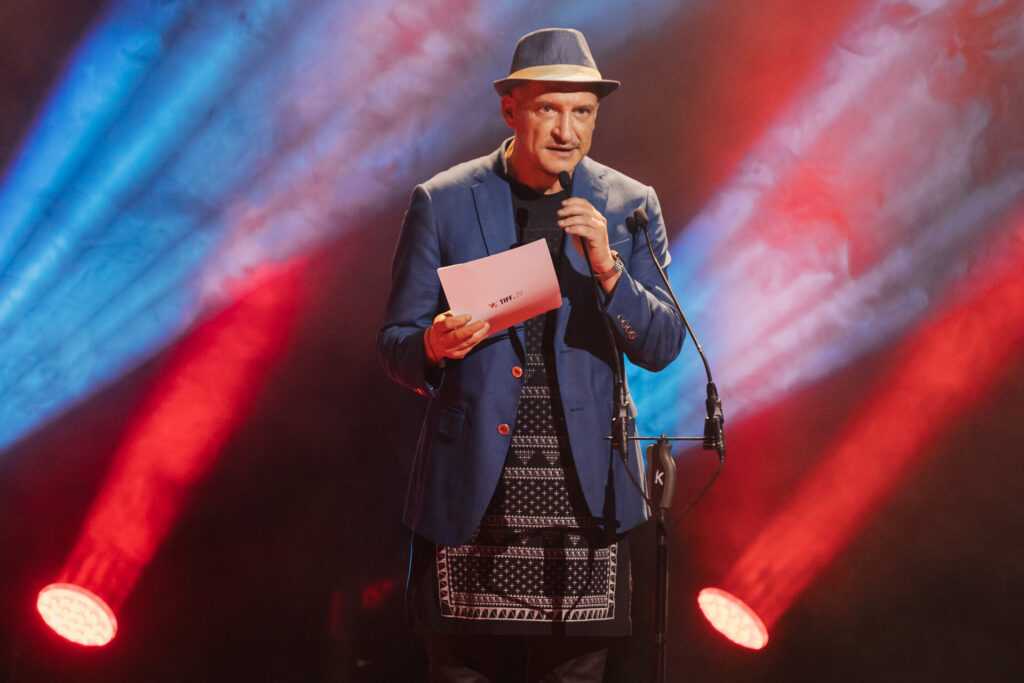
In closing, I want to invite you into a hot zone, starting with the opening film, 3 Days in September, and the recently awarded Fjord, which have sparked extensive discussions about the role of film criticism. What would you like to add on this subject, and what films do you think could complete the discussion in this year’s selection?
That it is a matter of common sense to write with full knowledge of the facts, not to hand down verdicts or judgments without having seen the film. It is an old malady, fatally accentuated in the era of instant reactions on social media, which does nothing but expose the rush for attention and the prejudices of a person that should otherwise be free-spirited and open-minded, as I believe a film critic ought to be.
Any framework of reading and analysis is permissible, as long as it is solidly argued and you don’t forget to actually say something about the film itself—without over-summarizing it, but rather dissecting its text, form, aesthetics, direction, etc.—which is not what happened in most of the reviews I read for Fjord, preoccupied as they were with thematic conformity, social utility, and correct positioning, written as if from the high perch of an ideological tribunal.
I would love to be wrong, but I suspect many of the films in The Pitch-Black Anthology are liable to suffer the exact same fate.